

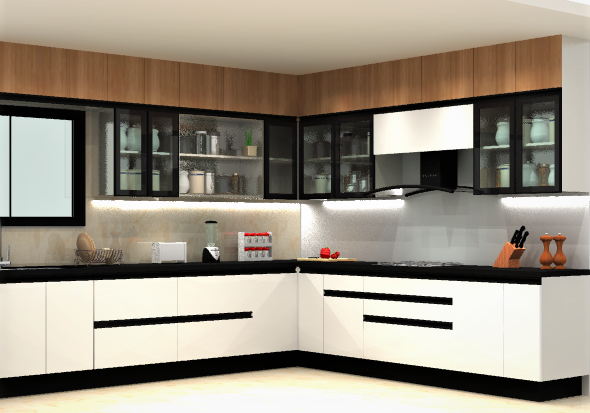
Modern homes are choosing a modular kitchen because of its aesthetics, efficiency and customizability. It offers a well-organized and sleek kitchen tailored to your needs. This guide will help you design a modular kitchen to suit your lifestyle.
1. Assess Your Needs
Start by evaluating the way you use your kitchen. Do you cook at home a lot, bake a lot, or prefer quick meals? Understanding your cooking needs and storage requirements will help you determine what features and layout your modular kitchen will include.
2. Select the Right Layout
Functionality is dependent on the layout. Common modular kitchen layouts include:
- L shaped: Ideal in corners, with ample counter space.
- U Shaped: Provides maximum storage and work space, ideal for large spaces and multiple users.
- Galley: Two parallel counters that are perfect for smaller spaces and efficient for cooking.
- Island: Provides additional counter space and storage for homes with open plans.
- Straight: Ideal for small spaces with all components on one wall.
Choose a layout to complement your kitchen and your cooking style.
3. Prioritize Storage Solutions
Modular kitchens provide a variety of storage options. Include a combination of deep drawers to store pots and pans; pull-out cabinets that hold pantry items and spaces dedicated for spices. Open shelves are ideal for displaying items and frequently used items. Innovative storage solutions such as carousel units or pull-out pantry system maximize efficiency.
4. Select Quality Materials
Select durable materials that match your aesthetic and lifestyle preferences. Consider plywood with a laminate finish as a durable and stylish option for cabinetry. MDF is also incredibly elegant, but at a budget-friendly price. Choose from granite, quartz or stainless steel for your countertops. They will not only look great but also withstand the daily wear and tear.
5. Focus on Ergonomics
Plan your kitchen for easy access and movement. Worktops should be comfortable and at a height of 36 inches or more above the ground. Place the stove, the sink and the refrigerator within easy reach to minimize effort when cooking.
6. Integrated Appliances
Choose built-in appliances which blend seamlessly with the cabinetry to create a uniform appearance. Integrated dishwashers, microwaves and ovens are sleek, while also saving space. Choose models that are energy efficient and cater to your style of cooking, whether you want a powerful induction cooktop or a compact gas range.
7. Lighting and ventilation
Ample lighting and ventilation enhance both functionality and ambience. Ambient lighting and task lighting enhance visibility of countertops. Keep the air in your kitchen fresh and free of odors by using an exhaust fan or chimney.
8. Design for Workflow
Plan a logical work flow that fits your cooking style. Make sure the prep area, sink and stove are all in the same place to ensure a smooth transition between tasks. Consider seating arrangements and space for serving and plating if you have an island in your kitchen.
9. Add Personal Touches
Add your own personality to your kitchen by using unique colors, backsplashes, and decorative elements. Your kitchen should reflect your style, whether it is a colorful scheme, a monochrome design, or a rustic look with wood.
10. Budget considerations
Budget your modular kitchen project realistically. Be prepared to balance cost and quality by prioritizing key elements such as cabinets, countertops and appliances. Modular kitchens are cost-effective because of their standard elements, but customization can require extra investment.
11. Future-Proof your design
Choose timeless materials and designs that are both stylish and functional. Design your home to accommodate future lifestyle changes such as the need for more storage space or to accommodate new appliances.
12. Seek professional guidance
A professional designer can offer valuable insight and help streamline the process of designing a kitchen. A professional kitchen designer can provide solutions that are tailored to your needs, as well as help you navigate the choices of layout, materials and appliances.
Following these guidelines will help you create a modular design that is stylish and perfectly suited to your lifestyle. Planning and designing with care will create a kitchen that is both functional and efficient while reflecting your own personal style.
Be the first to write a comment.